
Energy Surfaces and Spontaneous Reactions Virtual Lab
Learn the core concepts of thermodynamics and discover how chemical reactions can be represented with energy surfaces. Determine which chemical reactions are spontaneous.
-
High School
-
University / College





Labster is used by 1000s of amazing schools and universities
Learn moreAbout This Simulation
This short, targeted simulation is adapted from the full-length “Basic Chemistry Thermodynamics” simulation.
Energy is one of the great subject matters of our time, but what is energy actually? In this simulation you will learn the fundamental thermodynamic concepts of enthalpy, entropy and Gibbs free energy. You will study chemical reactions and Hess’s law with an energy surface. Learn about entropy and reaction spontaneity. Can you determine which chemical reactions are spontaneous?
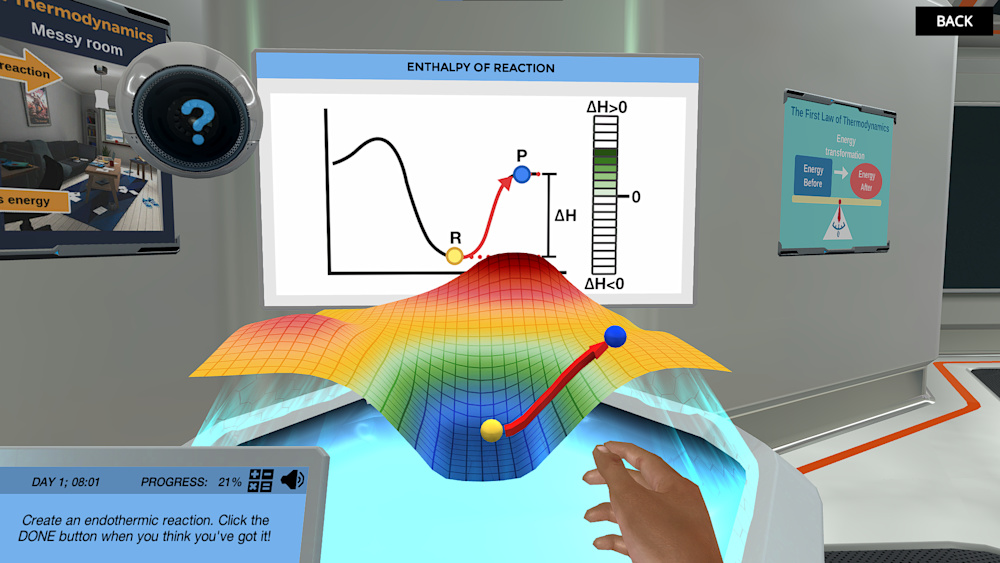
Exothermic and endothermic reactions
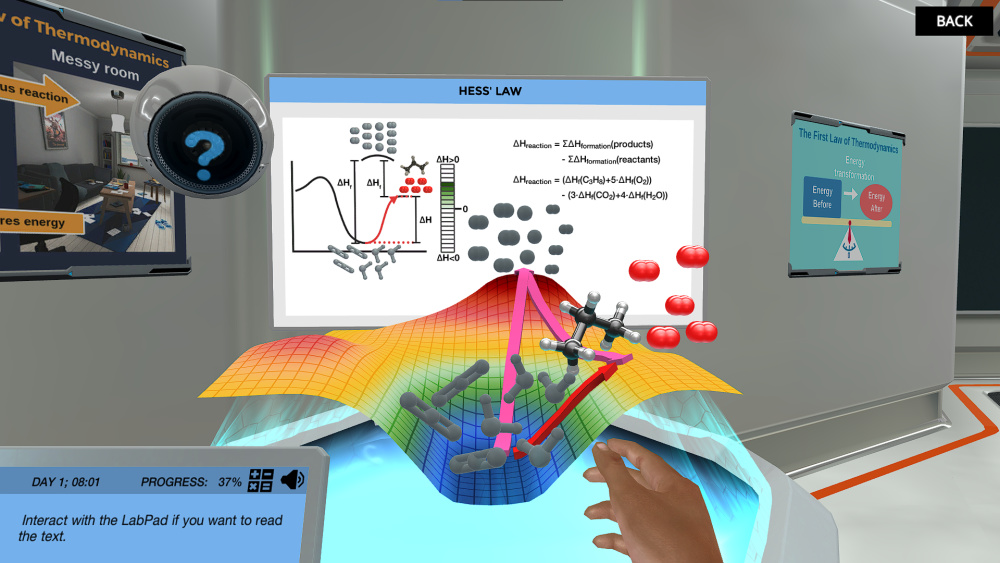
In this simulation, you can play around with the energy levels of reactants and products on a virtual energy surface to visualise the enthalpy of the reaction and learn about the difference between endothermic and exothermic reactions. Next visualise the combustion of propane on the energy surface and use Hess’s law to calculate the overall enthalpy from the enthalpies of reaction and formation.
The fundamental concepts of thermodynamics
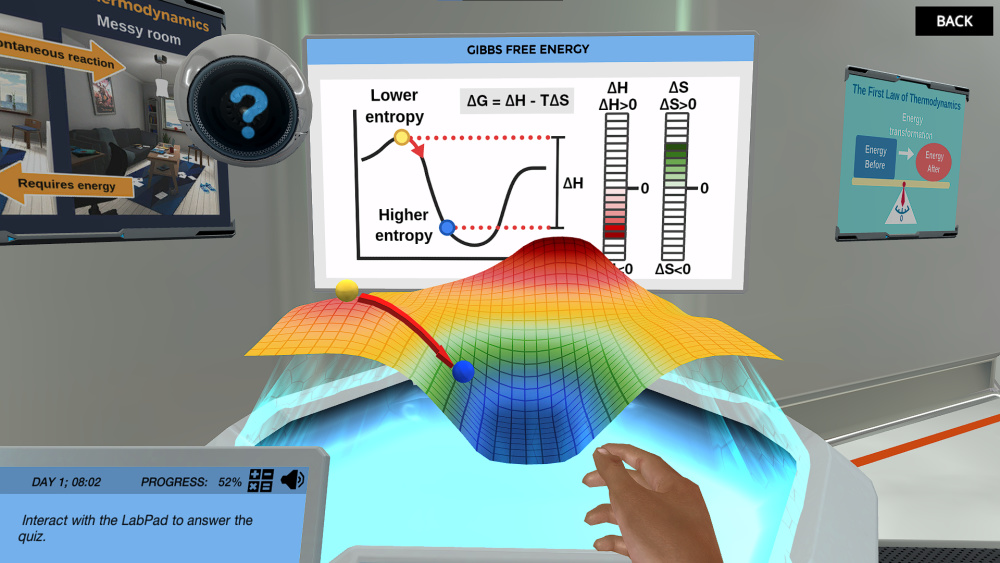
The second law of thermodynamics and the core concepts of enthalpy, entropy and Gibbs free energy are introduced in this simulation. Discover the second law of thermodynamic and the concept of entropy then apply what you learnt to the reaction on the energy surface. Understand the relationship between enthalpy, entropy, and gibbs free energy. The concept of reaction spontaneity is introduced and linked to the concept of Gibbs free energy.
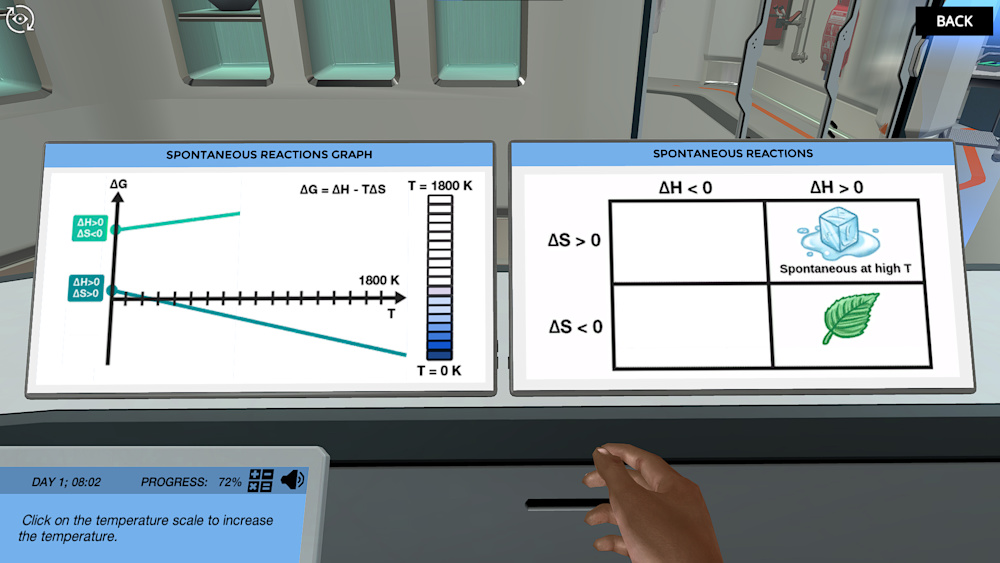
Spontaneous reactions
The temperature dependence of gibbs free energy and how this impacts reaction spontaneity is explored in an interactive game. Work out which chemical reactions are spontaneous and make a hypothesis about whether they remain spontaneous at higher temperatures. Explore the change in gibbs free energy and as the temperature changes. Will your hypothesis be correct?
Explore Energy Surfaces and Spontaneous Reactions Virtual Lab Simulation
How do virtual labs work?
Engage students in science through interactive learning scenarios. Simulate experiments, train lab techniques, and teach theory through visual experiences that enhance long-term learning outcomes.
250+ Web-based simulations that can be played on laptops and tablets without installing any software
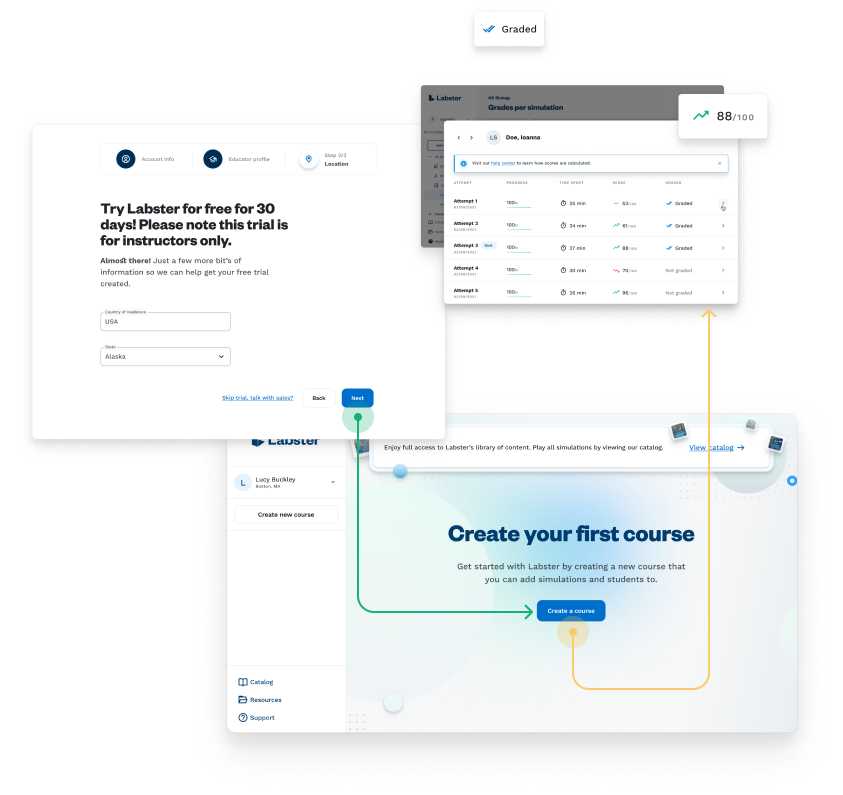
Teacher dashboard to automate grading and track student progress
Embedded quizzes to help students master science content
Library of learning resources, lab reports, videos, theory pages, graphics and more
Get started now!
您可以立即探索并分配模拟。华体会赞助ac米兰
-
Access to over 250 Labster simulations for free.
-
Exclusive educator access to all of Labster Course Manager content.
-
30 days for free, no credit card needed.
-
Invite your students to play simulations and get their feedback.

Integratewith your LMS
Integratewith your LMS
Labster integrates with all major LMS (Learning Management Systems) so that educators can use their gradebooks to track students’ performance data and students can keep a record of their work. Labster is compatible with Canvas, Blackboard, Moodle, Google Classroom, Schoology, Sakai, and Brightspace / D2L. It’s also possible to use Labster without an LMS.


